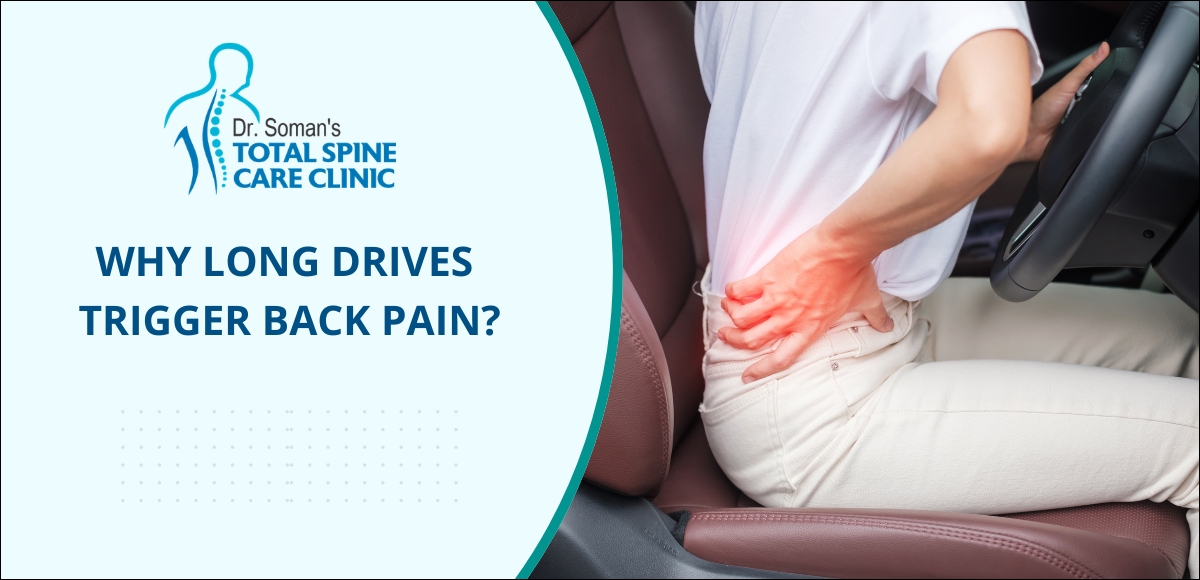
Why Long Drives Trigger Back Pain
Whether you’re commuting to work, going on a weekend road trip, or driving for your profession, spending long hours behind the wheel can take a toll on your back. Many people notice stiffness, soreness, or even sharp pain after a long drive. While it may seem like a minor inconvenience, frequent back pain can affect your daily life and overall health.
Why Does Driving Cause Back Pain?
Driving may appear to be a relaxing activity, but your body stays in one position for an extended period. Sitting for long hours puts continuous pressure on the muscles, joints, and spinal discs.
Some common reasons include:
Poor Sitting Posture
Many drivers unknowingly slouch or lean forward while driving. This places extra stress on the lower back and neck, leading to muscle fatigue and pain.
Lack of Movement
Our spine is designed to move. Sitting still for hours reduces blood circulation and causes muscles to become stiff. Over time, this stiffness can develop into chronic back pain.
Road Vibrations
Continuous vibration from the road transfers small shocks through the car seat to your spine. Long-term exposure to these vibrations may increase pressure on the spinal discs and surrounding muscles.
Weak Core Muscles
The muscles around your abdomen and lower back support your spine. Weak core muscles force your back to work harder during long drives, increasing the risk of pain.
Existing Spine Problems
Conditions such as slipped discs, arthritis, sciatica, or spinal degeneration often become worse during prolonged sitting.
Common Symptoms After Long Drives
You may experience:
- Lower back pain
- Neck stiffness
- Shoulder pain
- Pain radiating into the hips or legs
- Muscle tightness
- Tingling or numbness in the legs
- Difficulty standing up after getting out of the car
If these symptoms occur regularly, they should not be ignored.
How to Prevent Back Pain During Long Drives
Fortunately, a few simple habits can significantly reduce the risk of back pain.
Adjust Your Seat Properly
Keep your seat slightly reclined (about 100–110 degrees). Your hips should be level with or slightly higher than your knees. Sit close enough so your knees remain slightly bent while pressing the pedals.
Support Your Lower Back
Use the car’s lumbar support if available. If not, place a small cushion or rolled towel behind your lower back to maintain the natural curve of your spine.
Take Regular Breaks
Stop every 60 to 90 minutes during long journeys. Walk around for five minutes and gently stretch your back, legs, and shoulders.
Keep Both Hands on the Steering Wheel
Driving with one hand for long periods can create uneven stress on your shoulders and spine.
Stay Active
Regular walking, stretching, yoga, or core-strengthening exercises help improve spinal support and reduce the likelihood of back pain.
Avoid Keeping a Wallet in Your Back Pocket
Sitting on a thick wallet tilts your pelvis and creates uneven pressure on your spine, especially during long drives.
When Should You See a Doctor?
Occasional soreness may improve with rest, but medical evaluation is important if:
- Pain lasts for more than a few days
- The pain keeps returning after every drive
- You experience numbness or tingling
- Pain travels down your leg
- You notice weakness in your legs
- Back pain interferes with work or daily activities
Early treatment can prevent minor issues from becoming serious spinal conditions.
Treatment Options for Driving-Related Back Pain
The right treatment depends on the underlying cause. After a proper evaluation, your doctor may recommend:
- Lifestyle and posture correction
- Physiotherapy
- Stretching and strengthening exercises
- Pain management techniques
- Ergonomic advice for driving
- Advanced non-surgical treatments when appropriate
In some cases, imaging tests may be advised to identify conditions affecting the spine.
Simple Stretches Before and After Driving
Before starting your journey, spend a few minutes doing:
- Hamstring stretches
- Hip flexor stretches
- Cat-camel spinal movements
- Shoulder rolls
- Gentle lower back stretches
These exercises improve flexibility and prepare your muscles for prolonged sitting.
Consult Dr. Shardul Soman – Back Pain Specialist in Karvenagar Pune
If you frequently experience back pain after driving or sitting for long hours, don’t ignore the symptoms. Dr. Shardul Soman – Back Pain Specialist in Karvenagar Pune provides comprehensive evaluation and personalized treatment plans for various spine-related conditions. With a focus on identifying the root cause and offering effective non-surgical and advanced treatment options whenever appropriate, Dr. Soman helps patients return to a pain-free and active lifestyle. Schedule a consultation if persistent back pain is affecting your daily routine or travel comfort.
Frequently Asked Questions (FAQs)
1. Is it normal to have back pain after a long drive?
Mild stiffness is common, but persistent or severe pain should be evaluated by a specialist.
2. How often should I take breaks during long drives?
Ideally, stop every 60–90 minutes to walk and stretch for a few minutes.
3. Can poor posture while driving damage the spine?
Poor posture can increase stress on the spine and may worsen existing back problems over time.
4. Does using a lumbar support cushion help?
Yes, proper lumbar support helps maintain the natural curve of the lower back and reduces strain.
5. When should I consult a back pain specialist?
If your pain lasts more than a few days, recurs after driving, or is associated with numbness, weakness, or pain radiating to the legs, seek medical evaluation promptly.