Slip Disc: Symptoms, Causes and Treatment Options
A slip disc (herniated or prolapsed disc) is a condition in which the soft centre of a spinal disc bulges out through a tear in its outer layer and presses on nearby nerves, causing back or neck pain, pain radiating into the leg or arm, tingling, numbness or weakness. It most often affects the lower back and the neck. Common causes include age-related disc wear, lifting with poor technique, sudden twisting and prolonged sitting. Many people improve with rest, medicines and physiotherapy, while injections or surgery are considered for persistent or severe symptoms.
This guide explains how a slip disc happens, its symptoms, causes, how it is diagnosed and the treatment options available.
What Happens in a Slip Disc?
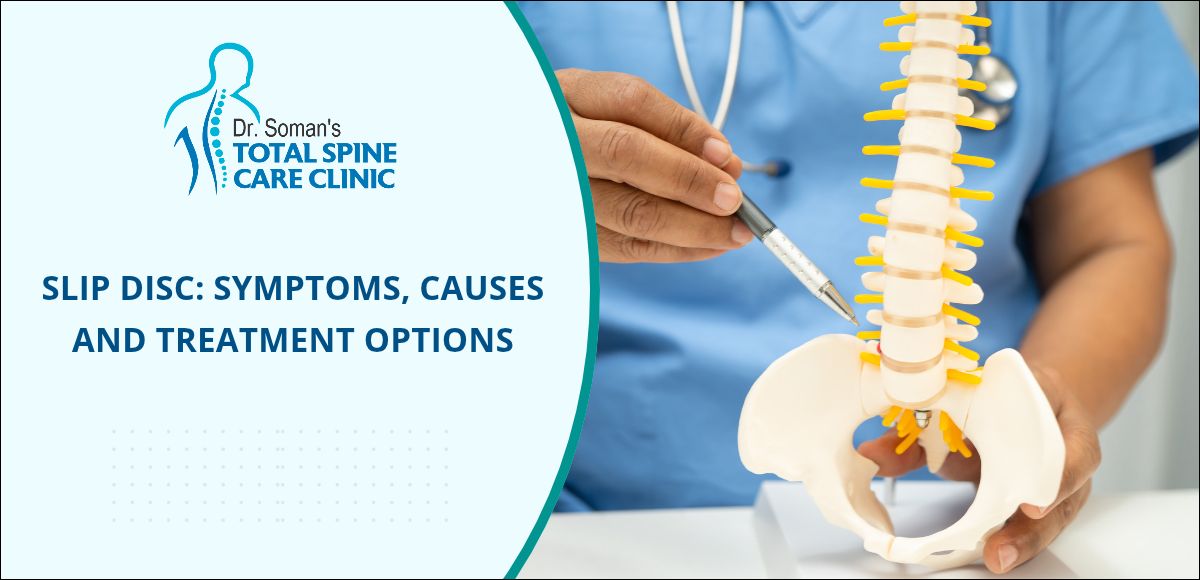
Spinal discs sit between the vertebrae and act as shock absorbers. Each disc has a tough outer ring (annulus) and a soft, jelly-like centre (nucleus). When the outer ring weakens or tears, the centre can push outwards. The disc does not actually slip out of place; the term “slip disc” is a common way of describing this bulge or herniation.
Where does it usually occur?
- Lower back (lumbar spine): the most common site, often causing sciatica
- Neck (cervical spine): can cause neck pain with pain or tingling in the shoulder, arm or hand
- Mid-back (thoracic spine): less common
Symptoms of a Slip Disc
Lower back disc
- Lower back pain
- Pain radiating through the buttock and down the leg (sciatica)
- Tingling or numbness in the leg or foot
- Weakness in the leg or foot, such as difficulty lifting the toes
- Pain that worsens with sitting, bending, coughing or sneezing
Read more on the symptoms of sciatica.
Neck disc
- Neck pain and stiffness
- Pain spreading to the shoulder blade, arm or fingers
- Tingling or numbness in the arm or hand
- Weak grip
Emergency symptoms
Seek urgent care for loss of bladder or bowel control, numbness in the groin or inner thighs, or rapidly worsening weakness in both legs.
What Causes a Slip Disc?
- Age-related wear: discs lose water content and become less flexible over time
- Lifting technique: bending from the waist to lift heavy objects
- Sudden twisting or a fall
- Prolonged sitting and poor posture, especially with long drives or desk work
- Excess body weight, which increases load on the lower spine
- Smoking, which can affect disc nutrition
- Physically demanding work with repeated bending and lifting
- Genetic tendency in some people
Our article on why long drives can trigger back pain looks at one of these factors in detail.
How Is a Slip Disc Diagnosed?
Clinical examination
The spine specialist asks about your symptoms and examines your back or neck, checking movement, reflexes, muscle strength and sensation. A straight leg raise test can show irritation of the sciatic nerve roots.
Imaging and tests
- MRI: the main test to visualise discs and nerve compression
- X-ray: to assess alignment, bone changes and instability
- CT scan: when MRI is not possible
- Nerve conduction studies: in selected cases, to assess nerve function
Imaging is usually advised when symptoms persist, there are nerve signs or red flags, or treatment such as injection or surgery is being planned.
Treatment Options for Slip Disc
Activity modification
Short rest during severe pain, followed by gradual return to normal activity, is usually recommended. Long bed rest is generally not advised.
Medicines
Pain relievers, anti-inflammatory medicines, muscle relaxants or medicines for nerve pain may be prescribed for a limited period.
Physiotherapy
A structured programme focuses on pain relief, posture correction, core and back muscle strengthening and safe movement patterns. See our physiotherapy services.
Spinal injections
In selected patients, image-guided epidural or nerve root injections may help reduce inflammation around the nerve and ease pain, allowing physiotherapy to continue.
Surgery
Surgery may be considered when:
- Leg or arm pain remains severe despite several weeks of non-surgical care
- There is progressive weakness or loss of sensation
- Bladder or bowel function is affected
Options include microdiscectomy and full endoscopic discectomy, where the portion of disc pressing on the nerve is removed through a small incision. The choice depends on the type and location of the herniation and the patient’s overall health. Learn more about spine disc surgery.
Preventing a Slip Disc and Recurrence
- Lift with your knees bent and the load close to your body
- Take breaks from sitting every 30 to 45 minutes
- Keep the core and back muscles strong with regular exercise
- Maintain a healthy body weight
- Stop smoking
- Use a supportive chair and correct screen height at work
Frequently Asked Questions
What is a slip disc?
A slip disc, also called a herniated or prolapsed disc, happens when the soft inner part of a spinal disc pushes out through a tear in its tougher outer layer. It can press on nearby nerves and cause pain, numbness or weakness.
Can a slip disc heal without surgery?
Many people with a slip disc improve over weeks to a few months with activity modification, medicines, physiotherapy and time. Surgery is considered when symptoms are severe, persist despite treatment or nerve function is affected.
What are the first symptoms of a slip disc?
Early symptoms often include back or neck pain followed by pain spreading into the leg or arm, tingling, numbness or a feeling of weakness. Symptoms may worsen with sitting, bending, coughing or sneezing.
Is walking good for a slip disc?
Gentle walking within comfortable limits is usually encouraged, as it keeps the spine moving and supports recovery. Avoid activities that sharply increase leg pain, and follow your doctor’s or physiotherapist’s advice.
Which test confirms a slip disc?
An MRI scan shows discs and nerves clearly and is the usual test to confirm a slip disc when needed. X-rays do not show discs directly but can help assess alignment and bones.
When is a slip disc an emergency?
Loss of bladder or bowel control, numbness around the groin or inner thighs and rapidly worsening weakness in the legs may indicate severe nerve compression (cauda equina syndrome), which needs emergency care.
Consult Dr. Shardul Soman at Total Spine Care, Karvenagar
If back or neck pain is spreading into your arm or leg, or is not improving, a spine consultation can help confirm the cause and plan treatment. Dr. Shardul Soman (MBBS, MS Orthopaedics, DNB Orthopaedics) is a consultant endoscopic spine surgeon with fellowship training in spine surgery in the USA, Singapore and Taiwan.
- Address: Shop No 8, Dr Soman Skin and Spine Clinic, Laxmi Terraces, Society Rd, near Paaitaan Footwear Shop, Karvenagar, Pune, Maharashtra 411052
- Phone: +91 88309 79364
- Timings: Monday to Saturday, 10 AM to 1 PM and 5 PM to 8 PM
You can also send an enquiry through the contact page.